Scoping Your System Boundary: What Is In and What Is Out
Defining what's in scope determines which risks get examined and which get hidden.
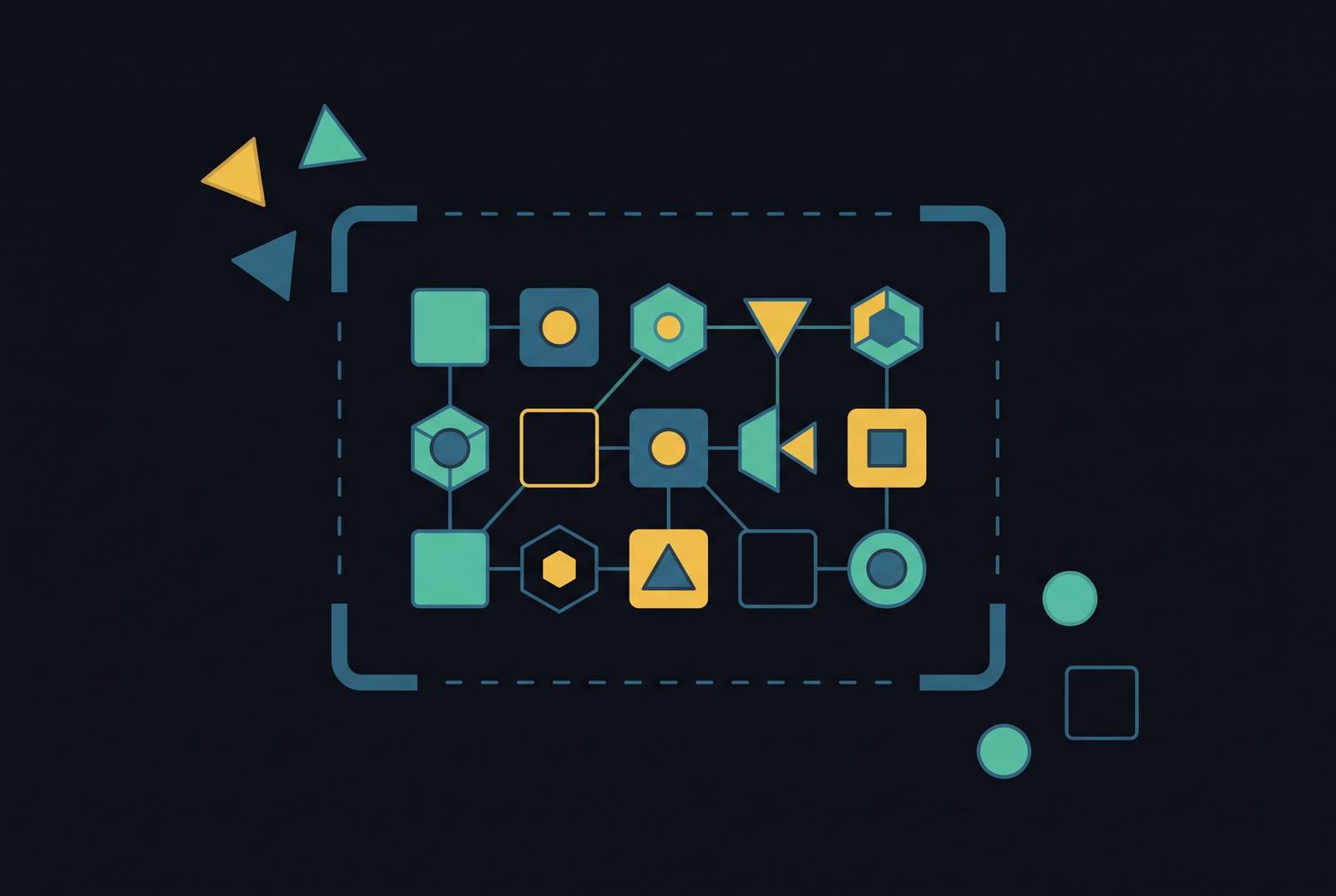
Before a single control is tested, before an auditor pulls a population of access reviews or examines a change management log, someone has to draw a line. Everything inside that line gets examined, evidenced, and opined upon. Everything outside it does not. That line is your system boundary, and where you place it will shape every downstream effort in your SOC 2 engagement, sometimes for years.
Most practitioners treat scoping as administrative throat-clearing, a formality before the real work begins. I understand that instinct. I have also watched it produce bad outcomes: reports that obscure meaningful risks, evidence burdens that collapse a team in year two, and findings that would not have existed if someone had thought more carefully about what to include before committing.
The scoping conversation is where the most consequential decisions in your compliance program get made. It just rarely feels that way at the time.
Writing the System Description
The system description is the artifact that makes your boundary legible, to your auditor, to your customers, and to anyone who reads the resulting report. Section 3 of a SOC 2 report is where this lives. The AICPA's description criteria require you to cover the nature of the services provided, principal service commitments and system requirements, the components of the system, and how those components interact.
What the criteria require and what practitioners actually write are frequently misaligned. The most common failure mode is abstraction. A description that reads "the Company provides a cloud-based SaaS platform enabling customers to manage their workflows" tells an auditor almost nothing operationally useful. A sophisticated reader gets even less.
The description needs to be specific enough that someone unfamiliar with your organization could reconstruct, at a reasonable level of fidelity, what actually runs, who touches it, and how data moves through it. That means naming the environment. Which cloud provider or providers host production? Are there on-premises components? Is there a CI/CD pipeline, and does it have write access to production? What datastores hold customer data, and where are they logically hosted? The description should reflect the system as it operates, not as you wish it operated or as you pitch it to a prospective customer.
A practical move: draft your system description before you finalize your scope. The act of writing forces specificity, and specificity surfaces surprises. You will discover, mid-draft, that you are uncertain whether a given tool or environment belongs inside the boundary. That uncertainty is not a problem. It is diagnostic. It tells you exactly where the decision still needs to be made.
In-Scope Infrastructure and Personnel
Once you have a working system description, you need to enumerate what is concretely inside the boundary. This covers two categories: infrastructure and people.
On the infrastructure side, you are mapping components that store, process, or transmit customer data, or that have the ability to affect the confidentiality, integrity, or availability of that data. Production systems are the obvious starting point. What generates real disagreement is supporting infrastructure: logging and monitoring platforms, secrets management systems, identity providers, vulnerability scanners, endpoint management tools. None of these hold customer records directly, but every one of them affects your production environment's security posture.
The test that actually works in practice is this: if this component were compromised or misconfigured, could it meaningfully affect the trust services criteria under examination? If the answer is yes, there is a real argument for inclusion. Audit firms vary in how expansively they apply this reasoning. Some pull in more than you expect. If you are uncertain about a specific component, ask your auditor early and write down what they say.
Personnel scope follows similar logic. The relevant question is which roles have the ability to access, modify, or administer in-scope systems. Engineering, DevOps, security, IT operations. People managers whose approvals gate access provisioning. Anyone with administrative or root-level access to production, regardless of their formal title.
HR is an interesting edge case. HR systems themselves may not be in scope for a security audit, but HR processes, including onboarding, offboarding, and background checks, generate evidence that auditors will test. The personnel whose activities you will be asked to evidence should enter the scoping conversation even when they are not "in scope" in the infrastructure sense. I have seen more than one organization discover this the hard way, midway through fieldwork.
Carve-Out Versus Inclusive Method for Subservice Organizations
This is where boundary decisions get complex, and where getting it wrong has direct consequences for how your report gets read and used.
Nearly every organization running cloud infrastructure relies on subservice organizations: third-party vendors whose services are part of how your system delivers on its trust commitments. Cloud providers, identity providers, payment processors, colocation facilities. The question is how you handle them in your report.
The AICPA offers two options.
The carve-out method excludes the subservice organization's controls from your system description and your testing. Your description acknowledges the reliance, specifies what you are counting on them to do, and discloses this to the report reader, who then must obtain assurance over that subservice organization separately, typically by reviewing their own SOC report.
The inclusive method does the opposite. You include the subservice organization's controls within your scope, and your auditor tests those controls or reviews the subservice organization's auditor's work under AT-C 205. This is more operationally complex and logistically demanding. It is less common.
Most organizations carve out their major infrastructure providers, and there is nothing wrong with that. AWS, Google Cloud, and Azure maintain their own SOC 2 reports; a sophisticated reader understands the dependency. Where carve-out method creates problems is when an organization uses it to obscure a significant operational dependency rather than to acknowledge a well-understood and independently assured one.
It is also worth considering a concrete scenario. A company outsources managed detection and response to a third-party security operations center. That organization has meaningful access to production logs and, in some configurations, to production systems themselves. If you carve them out, your report's control set will reference monitoring controls you do not directly operate. A careful auditor will want to see how you are monitoring the monitor. A careful customer will want to know the same thing.
The useful question is not "does carve-out simplify my audit?" It is "am I using carve-out to accurately represent a well-assured dependency, or to avoid scrutiny of one that isn't?" Those are different situations with different implications.
Treat carve-out decisions as disclosure decisions, not just scope decisions. You are not simply reducing your testing burden. You are making a representation to report readers about where control responsibility sits. That representation should be accurate.
Complementary User Entity Controls
CUECs are the controls your report explicitly states must be implemented by your customers for your own controls to function as described. They get treated as boilerplate constantly, added in a perfunctory way and then mostly ignored. That is a mistake with real downstream effects.
The canonical example is access management. If your platform provides role-based access controls but relies on the customer to configure those roles correctly and to deprovision users when they terminate employment, that reliance needs to be stated. Your controls govern the mechanism; the customer's controls govern its use.
CUECs matter for two reasons. First, they define the limits of your assurance. A report reader doing proper due diligence will check whether your stated CUECs reflect what they actually do. If you have articulated a CUEC that your customers routinely do not implement, there is an assurance gap in the broader system of controls, even if it never appears as a finding in your report. Second, in a security incident scenario, CUECs become directly relevant to questions of responsibility and causation. That matters more than people tend to think until it suddenly matters quite a lot.
The discipline of writing CUECs well is the same discipline as writing your system description well. Specificity in the description produces specificity in the CUECs. Vague descriptions produce vague CUECs, and vague CUECs are essentially useless to everyone.
But what if your audit firm's approach to CUECs varies significantly from what you expected? Worth asking your audit firm explicitly: do they actively help clients articulate CUECs during readiness, or do they treat drafting as primarily the client's responsibility and review the output? The answer varies considerably by firm. Knowing which camp you are in before fieldwork begins saves friction.
Boundary Too Wide: The Costs of Overscoping
The temptation to scope broadly is understandable. It feels safer. It feels like a more impressive, more comprehensive report will be more trustworthy to customers. What it does in practice is create a different, less visible set of problems.
The most immediate consequence is evidence burden. Every system in scope requires evidence of the controls you are asserting over it. Every personnel population in scope requires evidence of access reviews, background checks, security training. If you include a system with weaker controls than your primary production environment, you have created findings you would not otherwise have had. Some of those findings be significant enough to show up in the report you hand to customers.
There is also an organizational endurance problem. Evidence collection for a broad scope is not a one-time cost. It is a continuous operational commitment, every year the audit recurs. Organizations that scope too wide in year one sometimes find themselves drowning in evidence requests by year two, or quietly walking back scope in ways their audit firm does not accommodate gracefully. Neither outcome is good.
A less obvious cost: a very wide boundary can dilute the signal your report is supposed to convey. A report covering thirty infrastructure components with clean, consistent evidence conveys something meaningful. A report covering a hundred components, some of marginal relevance, is harder for a sophisticated reader to evaluate. More is not always more.
Boundary Too Narrow: The Costs of Underscoping
The opposite failure is at least equally serious, and it tends to surface later, less visibly, and at worse moments.
The most direct risk is false assurance. If you have excluded infrastructure with meaningful ability to affect the confidentiality or availability of customer data, your controls are operating exactly as described within the boundary while real risks exist outside it. A customer reading your report with appropriate trust is making procurement and risk decisions based on an incomplete picture. That raises an important question: who is responsible for identifying that gap before it becomes consequential?
Audit firms differ in how aggressively they scrutinize proposed scope for completeness. Some conduct thorough readiness assessments and push back on scope decisions they find insufficiently inclusive. Others rely heavily on management's representations and move on. If your firm is in the latter category, the burden of getting scope right falls more squarely on you than the engagement structure suggests.
The reputational dimension is worth naming plainly. If an incident involves a system or personnel population outside your SOC 2 scope, and that exclusion was not transparently disclosed in your system description, questions about why that exclusion was made will follow. The answers available at that point are rarely satisfying.
Underscoping shows up in two situations with notable consistency. One is when an organization is keeping scope tight to minimize audit cost. The other is when an organization has acquired or built infrastructure that is operationally significant but whose security posture it has not yet invested in seriously. In both cases, the answer is not to leave the infrastructure out of scope indefinitely. It is to either bring the controls up to the required standard or to be transparent about the exclusion and the reason for it.
Scope Is Not Static
Your system boundary is not fixed at the moment you first draw it. Systems change. Personnel change. Vendors come and go. Products evolve. A scoping decision that was accurate in year one can be materially inaccurate in year three without anyone having made a conscious decision to change anything.
That means the system description and scope warrant a structured review at the beginning of each audit cycle, not just a carry-forward from the prior year. That review should include a direct conversation with the engineering or operations team closest to the systems in scope, because the people maintaining the description are often not the people who would know about a new environment, a new tool, or a new vendor relationship introduced in the prior twelve months.
The boundary you draw before anyone shows up shapes what gets tested, what gets reported, what your customers see, and what the conversation looks like when something goes wrong. Drawing it thoughtfully, with specificity about your environment and transparency about your dependencies, is not administrative work. It is some of the most consequential work in the entire engagement.