ISO 27001 Scope Statement Requirements and Boundary Documentation
Auditors verify scope statements against three mandatory inputs, not templates or assumptions.
Clause 4.3 of ISO 27001 runs to a few sentences, yet those sentences carry more weight than almost any other part of the standard. The clause requires an organisation to determine the boundaries and applicability of its information security management system, and it names three specific inputs that have to feed into that decision: internal and external issues from Clause 4.1, the requirements of interested parties from Clause 4.2, and the interfaces and dependencies between the organisation's own activities and those run by other organisations. Nothing in that list is left to discretion. The standard uses the word "shall," and auditors treat that word as a condition, not a suggestion: at Stage 1, an auditor checks whether each of the three inputs can actually be traced into the boundary that was drawn.
Each input pulls in a different kind of material. Regulatory obligations, market position, and organisational structure fall under Clause 4.1 issues; ISO/IEC 27001:2022/Amd 1:2024 added whether climate change is a relevant issue for that organisation. Clause 4.2 requirements come from customers, regulators, insurers, investors, and staff, and EU GDPR, for instance, makes personal data a non-negotiable inclusion. Clause 4.3 interfaces and dependencies cover the connections to cloud providers, payroll platforms, and outsourced helpdesks, and those connections do not vanish just because the provider sits outside the ISMS boundary.
Gathering the inputs before writing the scope statement changes what the resulting document covers, so scope is not the document an organisation sits down to write first. The rest of this piece works from that ordering: gather the three inputs, turn them into boundary decisions, then write the documentation that reflects both.
Gathering and interpreting the three Clause 4.3 inputs
Gathering these three inputs takes real investigation. None of them can be assumed from a template or copied from a previous year's documentation, and skipping or shortcutting any one of them is the most common reason scope statements collapse at Stage 1.
Start with internal and external issues, the Clause 4.1 input. Internally, this means looking at how the organisation is structured, which departments actually handle sensitive information, and whether shared services like HR, finance, or IT cross the lines a future scope decision might draw. A finance team that touches customer payment data but reports outside the proposed ISMS boundary is exactly the kind of internal issue that has to be resolved here, not later. The three inputs are not guidance: the standard says organisations "shall consider" them, and an auditor at Stage 1 checks that each one is traceable into the scope decision. The 2022 UK heatwave, during which cooling-system failures hit Google and Oracle data centres in London and forced partial shutdowns, shows this is not a paperwork exercise. An organisation can still conclude that climate change isn't relevant to its own operations, but it has to show the conclusion came from genuine consideration rather than a box ticked in passing, and most certification bodies started checking for exactly that during surveillance audits from mid-2024 onward.
Next comes interested-party requirements, the Clause 4.2 input. This means identifying who actually has a stake in how the organisation handles information: customers, regulators, insurers, investors, staff, and the certification body itself. Amendment 1 added a note to Clause 4.2 stating that interested parties can have requirements related to climate change, a second entry point for the climate issue.
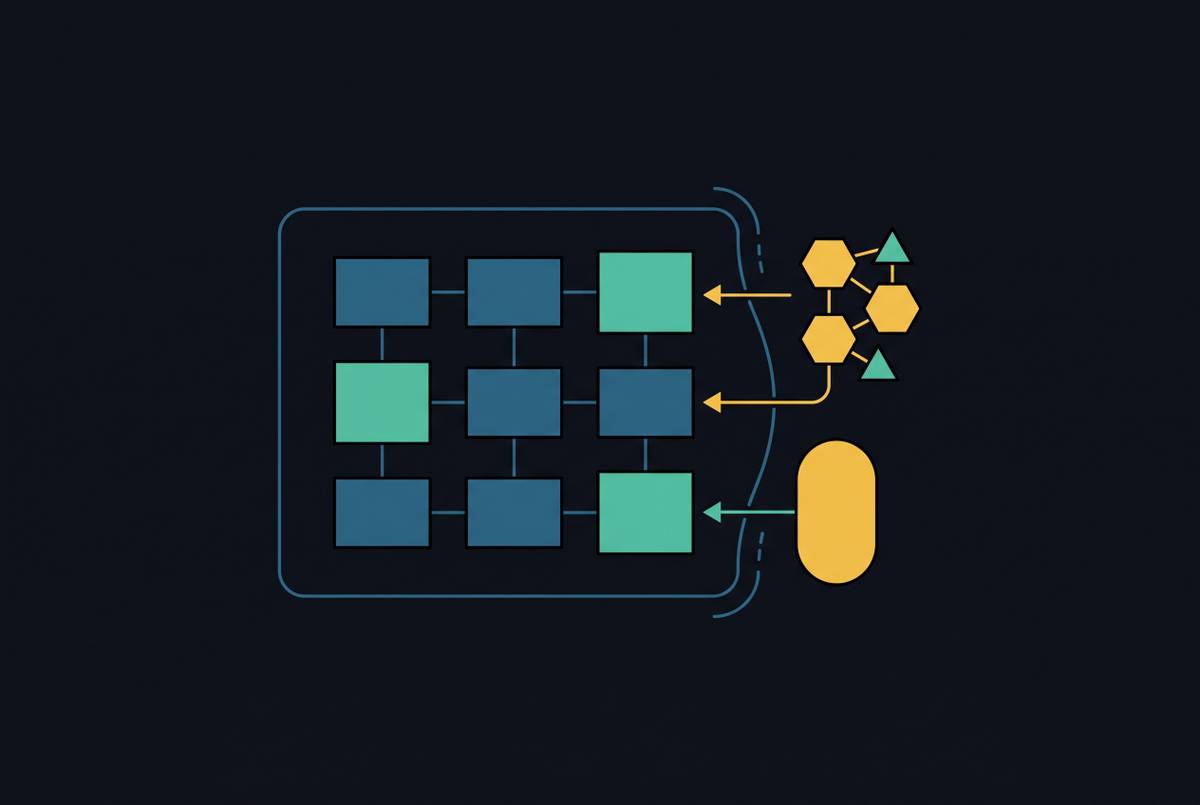
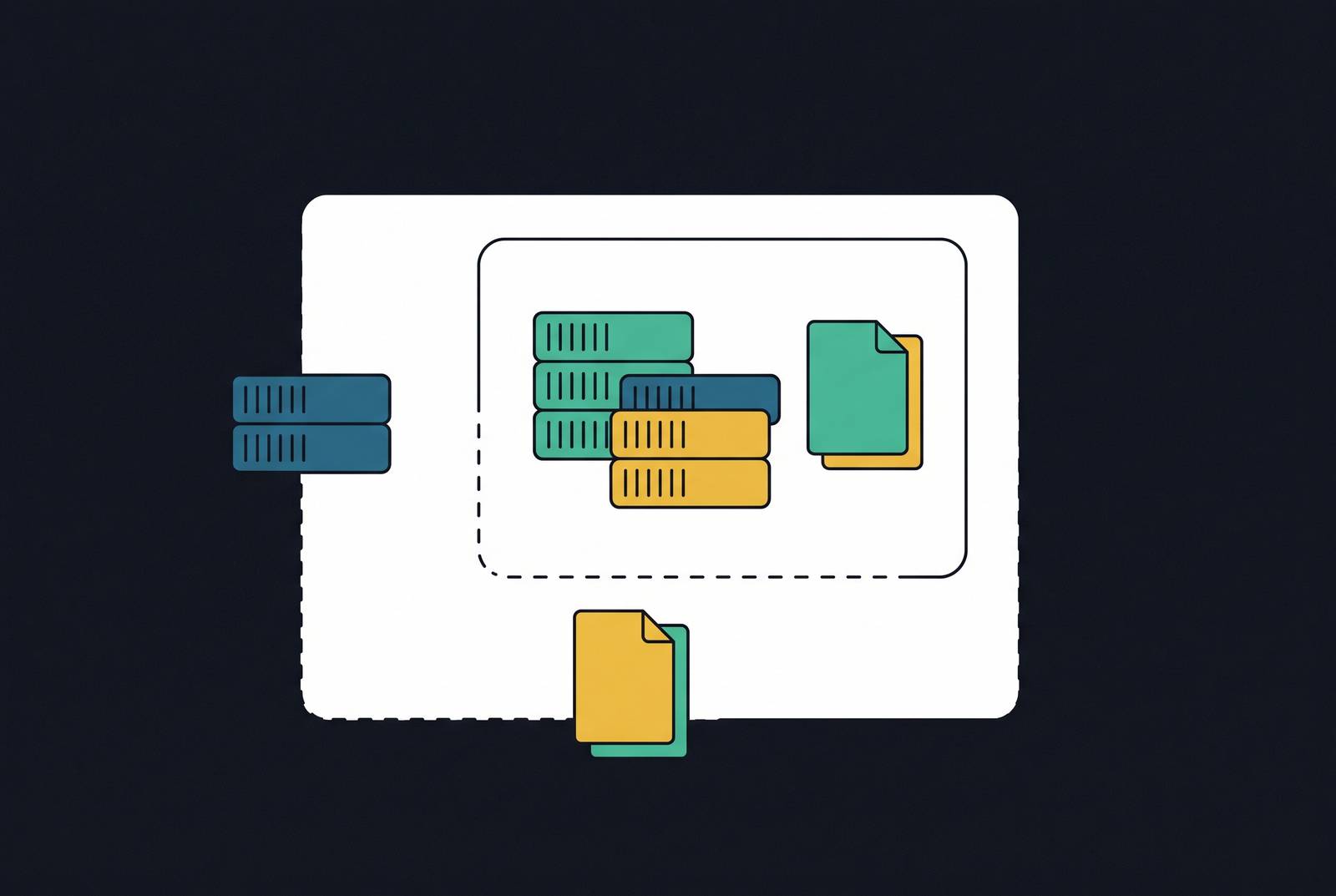
The third input, interfaces and dependencies, tends to be the one organisations handle worst. A useful way to work through it is to picture the intended scope as a circle. Inside the circle sit the processes the organisation runs directly. Outside it sit the processes other organisations run on the organisation's behalf. The interfaces are the points where the two touch: the router at the edge of the office network, the door at the entrance to a building, the API connecting to a cloud service. Common dependencies that must be named include cloud infrastructure providers such as AWS, Azure, or GCP, payroll platforms holding employee records, managed service providers pushing patches, and agencies writing code. Practitioners apply a rough but effective test here, sometimes called the Data Flow Rule: if the organisation controls the encryption keys or the access list for a given cloud service, that interface sits inside scope, whatever the marketing material for the cloud platform might suggest. Assuming the provider has it covered is the fastest way to fail Clause 4.3 at Stage 1. EIC Secure's findings across more than 45 ISO 27001 engagements identify this as the input most often skipped entirely.
Turning the three inputs into explicit boundary decisions across four dimensions
Gathering the three inputs is only half the job. They have to convert into decisions, and those decisions have to be made across four dimensions before anyone drafts a scope statement. A scope statement written without that groundwork reads as vague, and vague scope statements fail Stage 1 audits and mislead the customers who later read the certificate expecting it to mean something specific.
The four dimensions are geographic, organisational, information-asset, and interface. Organisational boundaries settle which business units, teams, contractors, and roles fall inside, and the deciding factor here is access to in-scope information rather than reporting line or job title. Information-asset boundaries settle which data sets, systems, applications, and repositories the ISMS covers, and the right method is to follow the information itself to whatever systems touch it, rather than starting from a list of systems and guessing what data lives on them. Interface boundaries settle which third-party processors and cloud services touch those in-scope assets, and those interfaces need to be named individually and managed as supplier relationships even when the provider itself sits outside the boundary.
That middle zone, the interfaces, is where most of the real judgment calls live, and it's also where a scope statement written too quickly tends to fall apart under audit questioning. The sequence that avoids rework runs in a specific direction: map the information assets first, follow them to the systems and people that touch them, draw the boundary and write down every exclusion, and only then draft the statement itself. Writing the scope statement before understanding what it actually implies means most of the resulting work becomes correcting a document that was never built on the right foundation.
Exclusions carry weight only when they're explained. A sentence like "the marketing website is excluded because it holds no customer data and is hosted separately" gives an auditor something to evaluate. Silence about an excluded system gives the auditor nothing, and at Stage 1, that gap becomes a direct question. Excluding something from the ISMS boundary is a different decision from excluding an Annex A control from the treatment plan: the first removes a system, team, or location from what the ISMS governs, while the second removes a specific control from how risk gets treated inside a boundary that still includes the relevant asset. Both decisions need documented reasoning, but they are not interchangeable.
Boundary patterns by organisational size and context
None of the three common scope patements, organisation-wide, product-only, or staged, is inherently correct. The right one is determined by what came out of inputs two and three: the requirements interested parties actually hold, and the interfaces that actually exist, not by whichever pattern looks easiest to write up.
Organisation-wide scope fits naturally when the entire entity runs under one coherent management system, or when external assurance requirements apply across the whole business rather than one part of it. A startup where every team shares the same office, the same software stack, and the same data often finds a whole-company scope simpler to manage than the alternative of drawing artificial internal lines between teams that already share everything. The risk on this path appears in execution rather than in the scope decision itself: evidence and control operation now have to cover every team, process, location, and system the organisation runs, and that volume of coverage is where things start to slip.
Product-only or business-line scope suits large enterprises trying to apply focused controls to a specific sensitive product line without slowing down every other part of the business. The risk here sits in shared infrastructure. A shared database, a shared support team, or a shared identity provider makes it hard to defend excluding the adjacent business unit that also touches those systems, and if developers outside the named scope still have production access, they're inside the boundary regardless of which org chart box they sit in. EIC Secure has flagged a specific version of this mistake repeatedly: certifying the HR department while leaving out the SaaS product that actually processes customer data.
Cloud environments deserve their own mention, because this is where uncertainty runs highest. Organisations hosting critical workloads in AWS, Azure, or GCP sometimes attempt to exclude those environments from the ISMS scope, a pattern EIC Secure identifies as one of the three most common scoping mistakes. Excluding a cloud provider from the ISMS boundary does not mean the organisation gets to ignore it. The organisation still relies on the provider's own certifications for the parts of the stack the provider controls, still manages that provider as a supplier dependency, and still carries full responsibility for its own configuration choices inside that environment, however the boundary line gets drawn.
Whichever pattern an organisation settles on, one test cuts through most of the disagreement: would the customer who asked for the ISO 27001 certificate in the first place be satisfied that the scope actually covers what they believe they're buying? That question tends to surface gaps a purely internal review misses.
What the documented scope must contain
The ISMS scope document and the certificate scope statement are related but distinct, and conflating them produces a scope document that is either too thin to satisfy an auditor or too dense to appear on a certificate.
The ISMS scope document is the internal, detailed record. It has to lay out the explicit boundary decisions already discussed: which products, services, teams, locations, systems, processes, roles, and dependencies sit inside the ISMS, and which sit outside, with a written justification attached to every exclusion. A short description of the relevant locations belongs here too. Advisera notes that auditors find this kind of location detail genuinely useful for understanding what they're about to audit, though floor plans or org-chart references only support the written boundary decisions, and they cannot substitute for them. The standard doesn't dictate a format for this document. It can stand alone, sit merged inside the Information Security Policy, or reference other outputs like the interested-parties register and the context-of-organisation analysis.
The certificate scope is a different document, built for a different purpose. It's the sentence that actually appears on the ISO 27001 certificate itself, and it has to be accurate, general, and short. It doesn't carry the same level of detail as the internal scope document, but it has one absolute constraint: it cannot reference any product, service, office, location, or department that was excluded from the audit. Procurement teams have gotten sharper about checking this. Cross-referencing the public certificate scope against the internal ISMS scope document has become routine practice on the buyer side, and any gap between the two now draws real scrutiny.
A workable pattern for drafting the certificate wording runs roughly as follows: the provision of [what the organisation does] to [who it does it for], including the systems and [locations involved], in accordance with the Statement of Applicability version [x] dated [date]. The reference to the Statement of Applicability isn't decorative. Siege Cyber notes that scope and the SoA are the two documents an auditor lines up against each other first, so tying the certificate wording to a specific SoA version closes an obvious gap before an auditor has to ask about it.
Both documents share one non-negotiable requirement: the scope has to exist as documented information, version-controlled and available whenever an audit calls for it. A scope decision that lives only in someone's memory does not meet Clause 4.3, no matter how sound the underlying reasoning was.
Amendment 1's Changes to the Clause 4.1 and 4.2 Inputs
Amendment 1 to ISO/IEC 27001:2022, published in February 2024, adds climate change as an explicit consideration inside both Clause 4.1 and Clause 4.2. That means climate-related issues now have to be evaluated as part of the mandatory inputs that shape every scope decision, not treated as an optional add-on for organisations that happen to care about the topic.
The change itself is narrow but specific. The organisation must now decide, under Clause 4.1, whether climate change counts as a relevant issue for it. Clause 4.2 picked up a note observing that interested parties can hold requirements related to climate change. Neither addition was written specifically for ISO 27001. The amendment came out of a coordinated update across roughly 31 different management system standards, which is part of why it reads as a short, almost understated insertion rather than a rewritten clause.
The consequences for scope work are anything but understated, though, particularly for organisations whose operations depend on physical infrastructure. Organisations running data centres, co-location facilities, or cloud infrastructure in regions prone to extreme weather are likely to conclude, once they actually work through the assessment, that climate change is relevant to their ISMS. That conclusion pulls physical resilience directly into the risk landscape the scoped ISMS has to address. The 2022 UK heatwave remains the clearest illustration available: cooling-system failures at Google and Oracle data centres in London led to VM terminations and hardware power-downs, turning a climate event into an information security incident with measurable, technical consequences.
None of this requires an organisation to rush out and recertify early. What it does require is that the assessment behind Clause 4.1 and Clause 4.2 actually happened and can be shown to an auditor on request. An organisation is free to conclude that climate change carries no meaningful relevance to its operations. What it cannot do is skip the question and hope nobody asks.
Sources
- ISO 27001 scope statement | How to set the scope of your ISMS
- IEC 27001
- ISO 27001 Scope: How to Define Your ISMS Boundary
- Practical ISO 27001 Scope Definition Guide
- ISO 27001 Scope Statement Explained + Template - High Table
- Climate Change and ISO 27001: The February 2024 Amendment Nobody Told You About
- ISO/IEC 27001:2022/Amd 1:2024 - Information security, cybersecurity and privacy protection — Information security management systems — Requirements — Amendment 1: Climate action changes